January 4, 2017

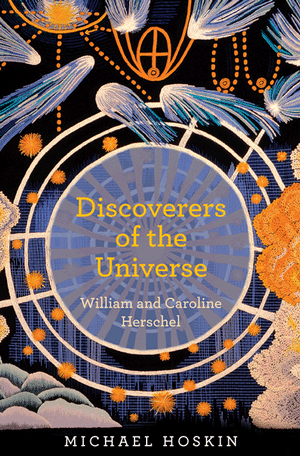
Discoverers of the Universe: William and Caroline Herschel

It is 3 a.m. on a damp and freezing night in the tiny English village of Slough. Just three miles north, in Windsor Castle, King George III lays sleeping. The night is moonless and billions of stars brilliantly pulsate from the heavens. All is silence and slumber, and then, a strange phantasm - twenty feet above his garden, a man sits on a platform, his eyes trained on the upper end of a monstrous telescope of his own making. An assistant stands below him, ready to move it at his command. A weak light from a nearby window breaks the unadulterated darkness and there a small woman sits at a desk. Books spread before her, clocks and mechanical instruments nearby; she sits posed with a pen in hand and paper in front of her. It is so cold the ink is nearly frozen in her inkwell, but on signal from the pull of a cord she opens the window. A man’s voice breaks the stillness and she carefully copies down his shouted observations. Then, consulting the charts and books in front of her, she shouts back information about where to look next in the sky before she closes the window. All is silence again, except for the scratching of her quill on paper.

It sounds like the makings of a science fiction novel, doesn’t it? But it is the story of William and Caroline Herschel: the 18th century brother/sister stargazing duo. William is probably best known for his discovery of Uranus and as the foremost telescope maker of the 18th century, but between the two of them they discovered new moons on Jupiter, countless nebulae, double stars, and comets. The author, Michael Hoskin, consistently points out that they were also instrumental in revising the view of the cosmos from a mechanical and clockwork universe, to a universe that changes, grows, contracts, and evolves. I guess you could say they were the Darwin of the skies.

William and Caroline were like a pair of binary stars. William was the brilliant inventor, observer and dreamer, but he was bound to Caroline who, though not the genius of the pair, was no less important as his assistant and as an astronomical observer in her own right. The success of one really depended on the help of the other.

While William was the driving force behind their discoveries and inventions, I find Caroline to be a more fascinating figure. From a 21st century feminist perspective it is a little hard to read Caroline’s half of the story and not feel like she was taken advantage of – first by a mother who wanted to keep her as an uneducated drudge, and then by her brother, who rescued her from a life of drudgery but then consistently put his own interests above hers. Hoskin sagely points out that it is both because of William’s selfishness and Caroline’s extreme unselfish commitment to him, that William was able to accomplish so much in his life. One can’t feel too sorry for her though. She was unyieldingly devoted to her brother and regularly made choices that kept her at his side. She was proud of her work, but more proud of his.

This book was succinct. Hoskin spends little time dwelling on the personal details of the Herschel’s lives, which I actually would have liked to see more of. For instance, when William finally marries there is little mention as to why he chose the woman he did or what he really saw in her. Perhaps no record of his emotions exist or quite possibly he saved his emotional and romantic energy for science rather than relationships.

Overall, this was a quick and fascinating read. I highly recommend it for anyone who wants to learn more about the Herschel’s and the wonders of early astronomy.


December 29, 2016

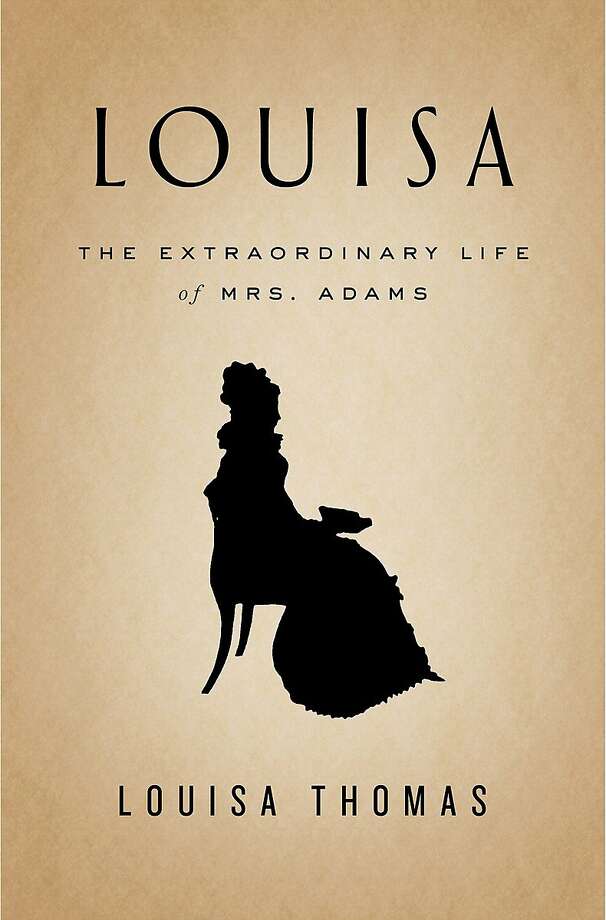
Louisa: The Extraordinary Life of Mrs. Adams

If you ever watched the HBO mini-series, John Adams, you probably developed a healthy appreciation for his wife, Abigail. Laura Linney’s portrayal of Abigail Adams was phenomenal: she was gritty, intelligent, hard working, independent, and most impressive of all, John Adams’ intellectual equal. She was the “ever guiding planet around which all evolved” (265). Abigail was the kind of woman you can’t help but admire and that you hope to emulate.

I suppose I expected the same character traits in John Quincy Adams’ wife, Louisa Adams, née Johnson. However, Louisa was not a stalwart farmwoman, nor was she interested in the staid and serious intellectual grind that was so valued by the Adams clan. Because of this, it took me a while to really come to see her strengths and appreciate her good qualities (ironically, it took a while for her mother-in-law as well).

Louisa was born in London and educated like your typical Jane Austen heroine. Her upbringing focused on entertaining, music, social skills, and speaking French. In short, she was raised for the marriage market. John Quincy and Louisa’s attraction to one another was complicated from the beginning. Both of them had strong reservations about each other. John Quincy was unsure she was serious and practical enough to be an American politician’s wife, and Louisa was unsure if he truly loved her. They both had strong tempers. As is often the case when a strong-minded man and an impetuous woman are thrown together, Louisa comes off looking the worst. In the beginning, she seems petty, immature, and lacking intellectual curiosity. She likes to dress up and be admired, she wants to wear rouge; she complains a lot and she’s unable to do anything even as practical as balancing their home account books.

However, as the years passed, a number of severe trials caused her to develop into a complex and sympathetic woman. She experienced numerous and often very painful miscarriages. She longed to be settled with her family, but she was forced to lead a nomadic lifestyle as a diplomat’s wife. And while she wasn’t interested in John Quincy’s Tacitus and Cicero, she set out on her own rather unpredictable, but no less valuable, course of study and reading. She was infinitely more interesting at 40 than she was at 20.

The most compelling chapter in Louisa’s life was when she and her youngest son, Charles, accompanied John Quincy on a diplomatic mission to St. Petersburg. Pressure from Abigail Adams forced her to leave her two older sons behind in America, something she always regretted. For six years she had to live in frozen, desolate Russia, while navigating the gaudy and extravagant aristocratic society of St. Petersburg royalty and politics. She experienced bitter loneliness and indescribable pain at the loss of a baby daughter while there. And when John Quincy was called away to Paris she was forced to live alone for nearly a year and then to make the dangerous journey from St. Petersburg to Paris on her own.

One of the most intriguing things about Louisa is that she was one of those women who is incredibly strong when they have to be, but who immediately crumples under male protection.

The author notes, “In times of adversity, forced to rise to the occasion, she often thrived. She had crossed thousands of miles from St. Petersburg to Paris, fording half-frozen rivers and meeting with unruly soldiers. She had made difficult decisions quickly and well. She had taken care of her small and terrified son. She had traveled through the night, slept very little, dealt with deserting servants, crossed battlefields, and ravaged villages, and faced the approach of a dictator. She had shown courage and self-command. She had not been overcome by fatigue. She had in fact completed the journey from St. Petersburg with such strength that her husband concluded the arduous trip had been crucial to her health. This same woman, once relieved from all responsibility and returned to the protection of her husband, after a much shorter and easier journey, was now helplessly tired and overwhelmed” (233 – 34).

John Quincy wasn’t the type of husband who was sympathetic to female weaknesses either. Much like his father, he was argumentative, bullish, and had an “I don’t give a damn what you think of me” attitude. He would shut himself up in his study, grumble and growl at visitors, and was often noted for being taciturn during important social occasions. I think Thomas makes a convincing case that without Louisa’s ability to navigate the social side of politics, there is a good chance John Quincy would have completely ostracized himself from politics through his reclusive tendencies. Louisa was charming and sociable and very aware that being able to make friends with people in high places could get you further than a well-constructed argument or strong political conventions.

A misanthrope and a social butterfly, they were an unlikely match and their relationship was often explosive and studded with anger and misunderstandings. Yet, however ill-suited their personalities were, their love became strong and true through a lifetime of shared struggles and tragedies.

A study of Louisa Adams’ life may not prompt the same respect and adoration as a study of Abigail’s would. However, her failings make her very human and approachable. Louisa truly led an “extraordinary life” because she became an extraordinary person. You will come away from this biography with not only an appreciation for her endurance and courage, but for her weaknesses as well.


December 23, 2016

A Man Called Ove

A Man Called Ove is the humorous and heartrending story of the curmudgeon next door. Ove is the kind of man who, on first making his acquaintance, you would probably shake your head, wonder what could make a man so spiteful, and then do your best to try and avoid him in the future. Ove’s approach to life is black and white. He is an obsessive rule follower and a crank. He works with his hands, follows an outdated code of masculinity, and he doesn’t understand why the world is changing around him.

Ove’s life gets turned upside down when a new family moves next door. A series of hilarious accidents follows in their wake and even while Ove shakes his head in bewilderment and his fist in rage, he can’t help but be drawn in by them.

I think everyone has or has had someone in their life who is a lot like Ove – the grandfather who rails against the price of pretty much everything, the taciturn old Uncle who sits unsociably at holiday dinners, the curmudgeonly neighbor who refuses to wave or smile when you pass by. The magic of this story is that it reveals the deep humanity that can be found underneath a harsh exterior. It is a reminder that even the most cantankerous and hard to understand people will flourish when they are loved and needed.


November 1, 2016

Behind Closed Doors: At Home in Georgian England

Behind Closed Doors is a study of Georgian interiors, the importance and purpose of home, emerging commercialism and desire for home goods, the domestic spheres in which men and women moved, and the social hierarchy and expectations in the home. It is also an analysis of Georgian home decorating, which includes such things as the popularization of wallpaper, the development of “taste,” and the simultaneous celebration and marginalization of women’s handicrafts.


What I found most enjoyable in Vickery’s book wasn’t the academic analysis of wallpaper or the analysis of male/female roles, but the case studies of the lives of individuals, as revealed through their letters and journals.

My favorite was the depressive spinster, Gertrude Savile, whose luckless love life was further compounded by having no money of her own. With no income, she was completely reliant on her brother, a rich baronet, and she keenly felt the humiliation of having to beg him for “every gown, sute of ribbins, pair of gloves, every pin and needle” (188). Her cheerless journal entries give vivid insight into her personal melodrama. Speaking of her brother’s house she says, “I was mightily estrang’d to it. It used to have a more friendly home air, but now I thought myself a stranger . . . I fancy’s the very walls look’d inhospitably upon me and that everything frown’d upon me for being an Intruder” (189). Bitter and feeling unwelcome, Gertrude would confine herself to her room, where handcrafts and her cat were her only pleasure. Luckily, for Gertrude, she was eventually liberated from this arrangement by a legacy, which allowed her to move into her own lodgings and experience the independence she always longed for.

There are dozens more stories of personal intrigue and tragedy, including that of the dissipated bachelor, George Hilton, whose diaries reveal an addiction to drinking, gambling, and whores. Filled with remorse, Hilton would resolve “to have soe punctuall a guard over my inclynacions as never to lose my reason my imooderate drinking” (71) and that “never will I knowe a woman carnaly except in a lawfull state.” (71). Of course, he broke these resolutions quite speedily, which he candidly recorded in his journal.

These stories are what made Vickery’s book come alive for me.

While Vickery writes with a liveliness and wit that may surprise you, considering much of her source documents were account books and ledgers, there was some unavoidable monotony, often coming in the form of the repetition of lists found in her research These are quick to skim over though and the majority of this book was filled with fascinating facts and pithy observations.

One of the benefits of reading this book is that there is an accompanying 3-disc series, At Home with the Georgians, which is narrated by Vickery and wonderfully entertaining. If the book sounds like a bit of an academic stretch for your reading tastes, just watching this series will give you the highlights of the book without any of the cumbersome academic discourse. ;)


October 18, 2016

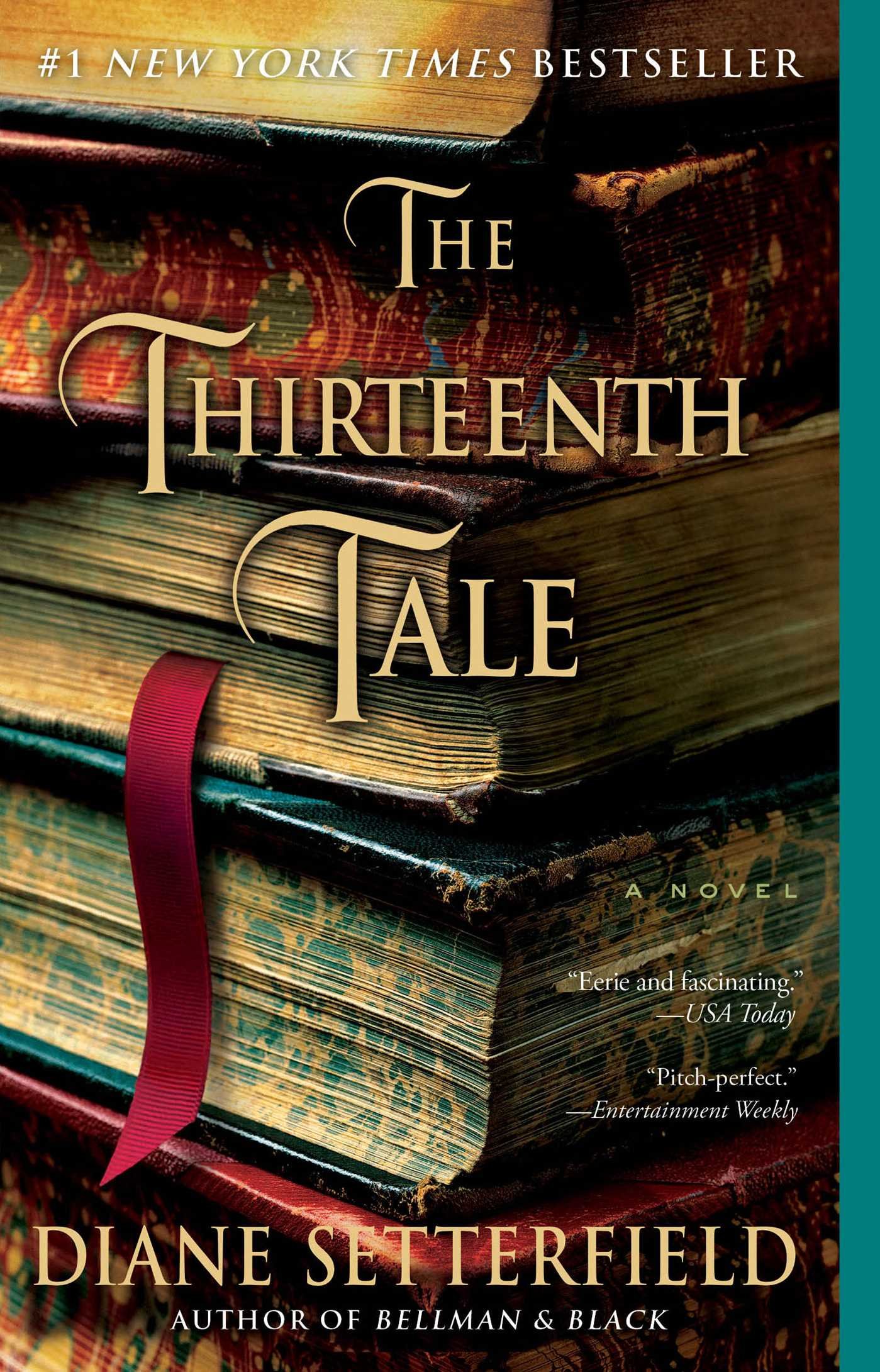
The Thirteenth Tale

Several years ago I took a graduate class in Gothic fiction. I remember a handout I was given that contained a list of commonly found elements in the gothic novel. This list included everything from dark omens and disturbing visions to women threatened by powerful and tyrannical males. The atmosphere of the gothic novel is filled with spine-tingling gloom and horror – buildings decay and crumble into ruins, eerie sounds come from dark rooms, and inexplicable presences abound.

Diana Setterfield must have had the same list because The Thirteenth Tale is gothic perfection. The main story unfolds as Vida Winter, a famous and reclusive writer, reveals her tragic and mysterious past. From her silent and forbidding mansion that sits on a cold and misty moor, Vida shares her story with her young biographer, Margaret Lea. Margaret, as we quickly learn, has a few issues of her own when it comes to ghosts and family drama.

Reading this book was like watching a dense fog slowly dissipate. At first, there is nothing but dim oppressiveness, but gradually the light filters through, the mist thins, and objects come into focus again. In-fact, it felt a lot like reading Wuthering Heights, with odd and awful characters, forbidden relationships, and that certain feeling that you don’t really like it, but it’s too thrilling to leave.

I think what surprised me most about this novel is that despite a large measure of tragedy and horror, Setterfield manages to give her readers a happy ending. She ties up the loose ends so neatly that it was the verbal equivalent of Martha Stewart wrapping a Christmas present, complete with perfect creases, hidden tape, and a handmade bow. While I usually appreciate a tidy and happy ending, it was hard to adjust to such an obvious change in tone after nearly 400 pages of exhilarating gloom.


September 10, 2016

The Historian

Elizabeth Kostova’s The Historian is a modern retelling of the Dracula tale. It is also a travelogue through Eastern Europe, a journey through Medieval European history, and a love story.

I don’t go in for horror and maybe that’s why I like Dracula tales. Most of the fear in Dracula comes from what could happen, not from what actually happens. His evil is real and his past atrocities are detailed, but in Kostovo’s story he becomes something of a sinister historian/librarian, rather than a widespread threat to humanity.

There are a lot of narrative devices used in this novel – letters, manuscripts, journals, and first person narrative. It gets a little overwhelming at times, but it also keeps the story from descending into the mundane. It’s important to have some variety in a 676-page novel.

I think what I liked most about this story was its academic wish fulfillment. Let’s face it, most academic research is about exciting as the main characters original research for his dissertation: Dutch merchants in the 17th century. However, in Kostova’s story, old books and ancient manuscripts are sought after and discovered with spine-tingling fervor, scholars receive mysterious books which awaken their desire to research and learn more, and for each character, what starts as a morbid interest in Dracula, becomes an elaborate academic game with life and death consequences.


September 2, 2016

My Autumn Reading List

A few weeks ago I decided to make an autumn bucket list. I came up with the usual things: bake a pumpkin pie, go to a pumpkin patch, pick apples, make butternut squash soup, etc. Apparently, fall makes me want to eat … Anyway, before I knew it my list had morphed into an autumn reading list. #bookwormproblems


A seasonal reading list might sound a little strange, but I’ve noticed that what I’m in the mood to read varies by season. I struggled to concentrate on anything more substantial than Nancy Drew and Young Adult fiction this past summer, but now as the year wanes, evenings come earlier, and a slight (ever so slight) chill is in the air, I eagerly anticipate wrapping myself in a cozy sweater and immersing myself in a good story. I want mystery, suspense, adventure, and some gothic thrills that include crumbling castles, desolate moors, mysterious men, and brooding Victorian heroines. I want a little magic and fun too.

So, without further ado, here is my autumn reading list:

The Historian – A modern retelling of the Dracula legend, the Historian weaves a tale that spans generations and takes its readers on a journey through some unpleasant medieval history, while also reveling in the beauty of Eastern Europe. The reader gets a spine-tingling opportunity to traverse countries such as Romania, Bulgaria, and Turkey, all while searching for the infamous Dracula and worrying about who might be his next victim. Even though I’m reading this right now, The Historian has Halloween written all over it.

The Thirteenth Tale – the synopsis of this book makes this one sound like a perfect gothic adventure: a reclusive writer with a painful past, feral twins, a governess, a ghost, a topiary garden and a devastating fire. Yes, please!

Emily of New Moon – I feel like Anne of Green Gables is for spring, but Emily of New Moon, with her thoughtful and introverted ways, is for fall. I’ve read this series once before, but I’m eager to read it again. As I recall, it’s a little darker and more serious than the Anne of Green Gables series, but still very enjoyable.

Harry Potter – wizards, witches, Hogwarts, Butterbeer, Pumpkin Pasties, magic wands, owls … need I say more? I’ve been working my way back through this series. I previously finished the first three books and now I have the last four to look forward to.

The Tenant of Wildfell Hall – because anything by a Bronte is bound to be dark and thrilling. I’m eager to read this work by the “forgotten” Bronte sister.

The Haunting of Hill House – According to Amazon, this book “has been hailed a perfect work of unnerving terror.” The author, Shirley Jackson, is probably best known for her short story, “The Lottery,” which certainly contained its own horror. I’m not usually into terror (you’ll probably never find me reading Stephan King), but this does sound like the perfect haunted house tale, so I’m going to give it a try.

The Shadow of the Wind – I think I’ve had this book on my shelf for almost ten years. I started reading it twice, liked it, but for some reason never got through it. I’m determined to read it this season! The Amazon synopsis makes it sound so appealing that I’m just going to cut and paste it here. I know this is going to be a good read! “Barcelona, 1945: A city slowly heals in the aftermath of the Spanish Civil War, and Daniel, an antiquarian book dealer’s son who mourns the loss of his mother, finds solace in a mysterious book entitled The Shadow of the Wind, by one Julián Carax. But when he sets out to find the author’s other works, he makes a shocking discovery: someone has been systematically destroying every copy of every book Carax has written. In fact, Daniel may have the last of Carax’s books in existence. Soon Daniel’s seemingly innocent quest opens a door into one of Barcelona’s darkest secrets--an epic story of murder, madness, and doomed love.”

Charlotte Bronte: A Fiery Heart– because a reader can’t live by fiction alone. The cover of this book assures me that Charlotte is as mysterious and melancholy as the heroines of her stories, and I’m eager to know more about the author of two of my favorite novels.

The Cider House Rules – I’ve been meaning to read this sense I saw the movie. I suppose there’s no other reason it’s on this list than that the title contains the word “cider,” which makes me think of autumn (insert eye roll).

Jane Eyre – a desolate moor, a crazy first wife locked away in a tower, a man so ruggedly ugly he’s almost handsome, and the lonely and willful woman he falls in love with is the epitome of the what I’m looking for in my autumn reading this year. It doesn’t matter how many times I’ve read this book, I will always come back to it. And yes, I will be watching the movie too!


What’s on your autumn reading list? Is there a certain book or books that you like to read this time of year?


UP