October 18, 2016

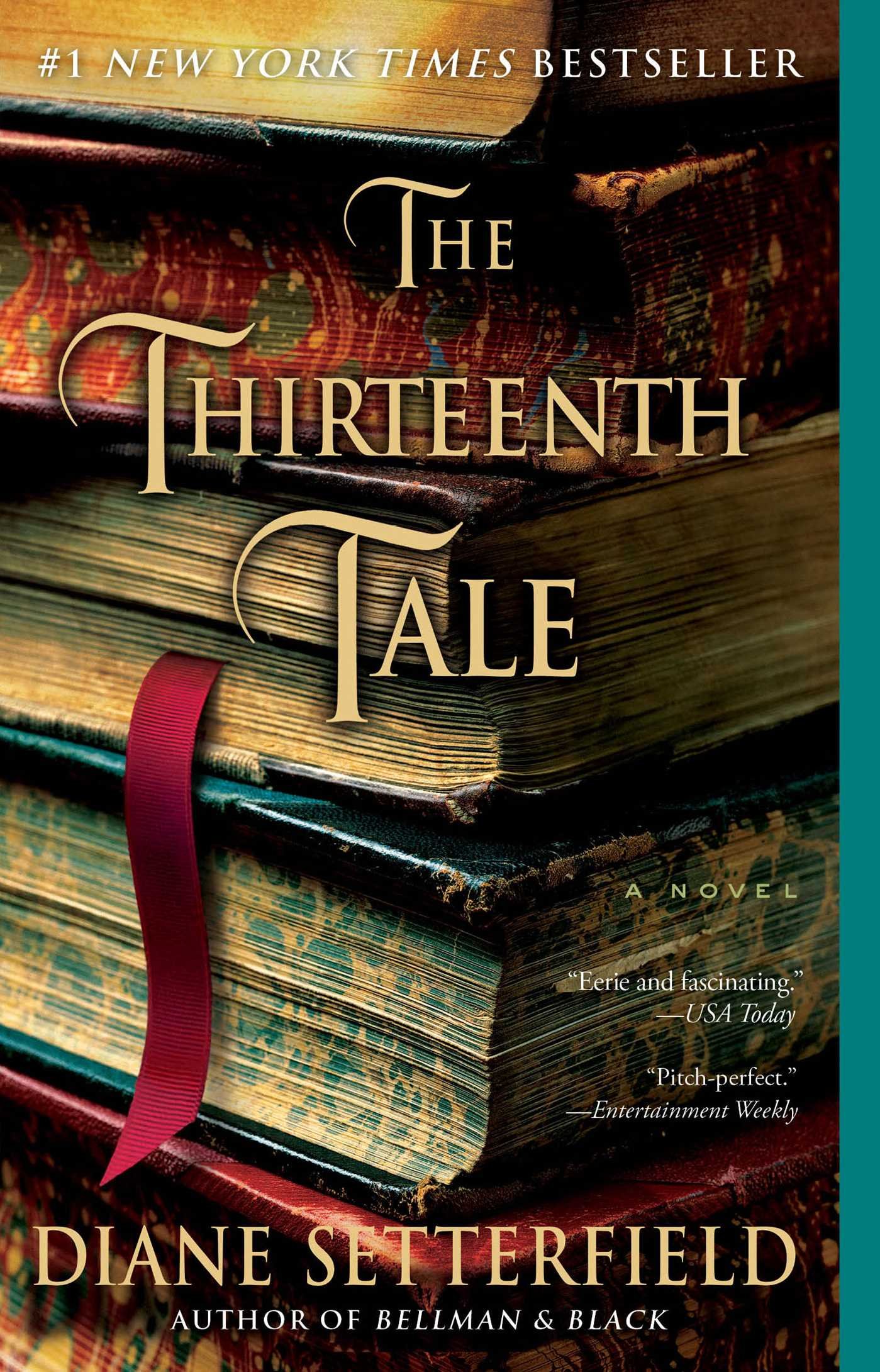
The Thirteenth Tale

Several years ago I took a graduate class in Gothic fiction. I remember a handout I was given that contained a list of commonly found elements in the gothic novel. This list included everything from dark omens and disturbing visions to women threatened by powerful and tyrannical males. The atmosphere of the gothic novel is filled with spine-tingling gloom and horror – buildings decay and crumble into ruins, eerie sounds come from dark rooms, and inexplicable presences abound.

Diana Setterfield must have had the same list because The Thirteenth Tale is gothic perfection. The main story unfolds as Vida Winter, a famous and reclusive writer, reveals her tragic and mysterious past. From her silent and forbidding mansion that sits on a cold and misty moor, Vida shares her story with her young biographer, Margaret Lea. Margaret, as we quickly learn, has a few issues of her own when it comes to ghosts and family drama.

Reading this book was like watching a dense fog slowly dissipate. At first, there is nothing but dim oppressiveness, but gradually the light filters through, the mist thins, and objects come into focus again. In-fact, it felt a lot like reading Wuthering Heights, with odd and awful characters, forbidden relationships, and that certain feeling that you don’t really like it, but it’s too thrilling to leave.

I think what surprised me most about this novel is that despite a large measure of tragedy and horror, Setterfield manages to give her readers a happy ending. She ties up the loose ends so neatly that it was the verbal equivalent of Martha Stewart wrapping a Christmas present, complete with perfect creases, hidden tape, and a handmade bow. While I usually appreciate a tidy and happy ending, it was hard to adjust to such an obvious change in tone after nearly 400 pages of exhilarating gloom.


September 10, 2016

The Historian

Elizabeth Kostova’s The Historian is a modern retelling of the Dracula tale. It is also a travelogue through Eastern Europe, a journey through Medieval European history, and a love story.

I don’t go in for horror and maybe that’s why I like Dracula tales. Most of the fear in Dracula comes from what could happen, not from what actually happens. His evil is real and his past atrocities are detailed, but in Kostovo’s story he becomes something of a sinister historian/librarian, rather than a widespread threat to humanity.

There are a lot of narrative devices used in this novel – letters, manuscripts, journals, and first person narrative. It gets a little overwhelming at times, but it also keeps the story from descending into the mundane. It’s important to have some variety in a 676-page novel.

I think what I liked most about this story was its academic wish fulfillment. Let’s face it, most academic research is about exciting as the main characters original research for his dissertation: Dutch merchants in the 17th century. However, in Kostova’s story, old books and ancient manuscripts are sought after and discovered with spine-tingling fervor, scholars receive mysterious books which awaken their desire to research and learn more, and for each character, what starts as a morbid interest in Dracula, becomes an elaborate academic game with life and death consequences.


September 2, 2016

My Autumn Reading List

A few weeks ago I decided to make an autumn bucket list. I came up with the usual things: bake a pumpkin pie, go to a pumpkin patch, pick apples, make butternut squash soup, etc. Apparently, fall makes me want to eat … Anyway, before I knew it my list had morphed into an autumn reading list. #bookwormproblems


A seasonal reading list might sound a little strange, but I’ve noticed that what I’m in the mood to read varies by season. I struggled to concentrate on anything more substantial than Nancy Drew and Young Adult fiction this past summer, but now as the year wanes, evenings come earlier, and a slight (ever so slight) chill is in the air, I eagerly anticipate wrapping myself in a cozy sweater and immersing myself in a good story. I want mystery, suspense, adventure, and some gothic thrills that include crumbling castles, desolate moors, mysterious men, and brooding Victorian heroines. I want a little magic and fun too.

So, without further ado, here is my autumn reading list:

The Historian – A modern retelling of the Dracula legend, the Historian weaves a tale that spans generations and takes its readers on a journey through some unpleasant medieval history, while also reveling in the beauty of Eastern Europe. The reader gets a spine-tingling opportunity to traverse countries such as Romania, Bulgaria, and Turkey, all while searching for the infamous Dracula and worrying about who might be his next victim. Even though I’m reading this right now, The Historian has Halloween written all over it.

The Thirteenth Tale – the synopsis of this book makes this one sound like a perfect gothic adventure: a reclusive writer with a painful past, feral twins, a governess, a ghost, a topiary garden and a devastating fire. Yes, please!

Emily of New Moon – I feel like Anne of Green Gables is for spring, but Emily of New Moon, with her thoughtful and introverted ways, is for fall. I’ve read this series once before, but I’m eager to read it again. As I recall, it’s a little darker and more serious than the Anne of Green Gables series, but still very enjoyable.

Harry Potter – wizards, witches, Hogwarts, Butterbeer, Pumpkin Pasties, magic wands, owls … need I say more? I’ve been working my way back through this series. I previously finished the first three books and now I have the last four to look forward to.

The Tenant of Wildfell Hall – because anything by a Bronte is bound to be dark and thrilling. I’m eager to read this work by the “forgotten” Bronte sister.

The Haunting of Hill House – According to Amazon, this book “has been hailed a perfect work of unnerving terror.” The author, Shirley Jackson, is probably best known for her short story, “The Lottery,” which certainly contained its own horror. I’m not usually into terror (you’ll probably never find me reading Stephan King), but this does sound like the perfect haunted house tale, so I’m going to give it a try.

The Shadow of the Wind – I think I’ve had this book on my shelf for almost ten years. I started reading it twice, liked it, but for some reason never got through it. I’m determined to read it this season! The Amazon synopsis makes it sound so appealing that I’m just going to cut and paste it here. I know this is going to be a good read! “Barcelona, 1945: A city slowly heals in the aftermath of the Spanish Civil War, and Daniel, an antiquarian book dealer’s son who mourns the loss of his mother, finds solace in a mysterious book entitled The Shadow of the Wind, by one Julián Carax. But when he sets out to find the author’s other works, he makes a shocking discovery: someone has been systematically destroying every copy of every book Carax has written. In fact, Daniel may have the last of Carax’s books in existence. Soon Daniel’s seemingly innocent quest opens a door into one of Barcelona’s darkest secrets--an epic story of murder, madness, and doomed love.”

Charlotte Bronte: A Fiery Heart– because a reader can’t live by fiction alone. The cover of this book assures me that Charlotte is as mysterious and melancholy as the heroines of her stories, and I’m eager to know more about the author of two of my favorite novels.

The Cider House Rules – I’ve been meaning to read this sense I saw the movie. I suppose there’s no other reason it’s on this list than that the title contains the word “cider,” which makes me think of autumn (insert eye roll).

Jane Eyre – a desolate moor, a crazy first wife locked away in a tower, a man so ruggedly ugly he’s almost handsome, and the lonely and willful woman he falls in love with is the epitome of the what I’m looking for in my autumn reading this year. It doesn’t matter how many times I’ve read this book, I will always come back to it. And yes, I will be watching the movie too!


What’s on your autumn reading list? Is there a certain book or books that you like to read this time of year?

August 11, 2016

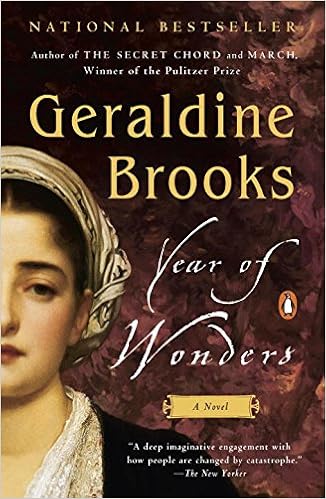
Year of Wonders

It seems slightly wrong to enjoy a novel about the plague, but I certainly enjoyed this story. Year of Wonders: A Novel of the Plague, is based on the true story of a village in Derbyshire England which was struck by the Black Death in 1665 and whose occupants made the choice to quarantine themselves in their village, rather than risk spreading the plague to others.

In the hands of a less competent writer, a novel centered on the plague could have easily gone asunder, but I have nothing but praise for Geraldine Brooks’ handling of the subject. There’s a care in her writing, a purpose to every word, which is probably the product of her experience as a correspondent for The Wall Street Journal.

From what previous knowledge I have about the plague, I would say that Brooks did a good job of demonstrating how the plague was key in the shifting and leveling of social classes and how individuals might struggle between faith and superstition in a time where no one knew the cause of the plague or how it spread. Where could people turn for comfort when their religious worldview was shaped by the harsh and puritanical beliefs of a wrathful God who is quick to punish the wicked?

I think Brooks’ genius comes from her ability to isolate. She chooses a sweeping historical event and then uses it as a backdrop, telling the story through marginal and seemingly insignificant characters. For instance, in March, we experience the Civil War through the eyes of the father from Little Women and in Year of Wonders she shows us how it might have been to experience life in the 17th Century and the horrors of the Black Death through a singular and courageous servant woman in a remote village in Derbyshire, England.


July 27, 2016

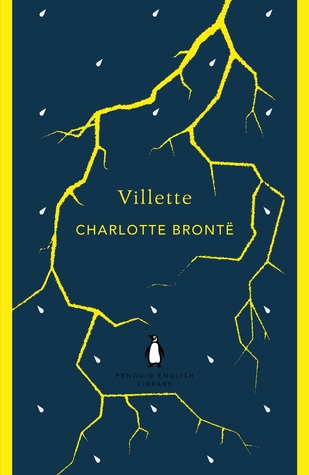
Villette

The protagonist of Villette, Lucy Snowe, is like that friend you have whom you know needs Prozac, but you can’t think of a polite way to tell her. Lucy is the embodiment of an introvert and would probably be diagnosed with social anxiety disorder today. She is depressed and depressive; often acerbically witty in thought, but rarely able to transform this wit into action. When it comes to social interactions she freezes like a bucket of water in a January snowstorm.

She sounds dreary, doesn’t she? The truth is, all of the Bronte’s were dreary women and you either love them for it or run as fast as you can to the Austen section and pick out a book that doesn’t make you want to hurl yourself onto the desolate moor and bemoan the wicked unfairness of life and the inconsistency of men.

So, why should you read this novel? Because even though Lucy may need anti-depressants, the portrait Bronte writes of her is one of intense believability. Her feelings are real. When she talks about being forgotten or being alone or what it feels like to love someone and know that they would never even think twice about you in the same way – you get it. You understand her when she describes what it feels like to know that you aren’t impressive, that you don’t fit in, and that you will never be like the popular girls. Despite herself, Lucy Snowe is likable - she just doesn’t know it.

And the prose … wow! Bronte’s genius drips from her pen in a series of similes and metaphors that will transform the way you see the world. One of my favorite passages was this description of the moon:

“Where, indeed, does the moon not look well? What is the scene, confined or expansive, which her orb does not hallow? Rosy or fiery, she mounted now above a not distant bank; even while we watched her flushed ascent, she cleared to gold, and in a very brief space, floated up stainless into a now calm sky” (208).

If that doesn’t give you goose bumps, you probably don’t want to attempt the 555 pages of this novel.


June 1, 2016

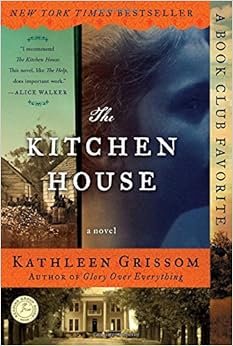
The Kitchen House

Vivid and fast paced, The Kitchen House transports readers to antebellum Virginia, where the good and evil of humanity plays out in epic style on a sprawling tobacco plantation.

The story mainly focuses on the Irish orphan, Lavinia, who for much of the book exists in a no-man’s land of race and class. An indentured servant on the plantation, she lives, works, and loves the slaves whom she resides with, yet her skin color means that she can’t fully assimilate into their world. As we follow Lavinia’s story, we witness the intricacies of friendship, familial bonds, and, of course, racial prejudice.

Overall, I really liked this book and would recommend it; however, I don’t think it touched on any issues involving slavery, race, or the politics of plantation life that haven’t already been gone over in other books and movies. For the most part, the author wrote her characters into comfortable stereotypes: the steadfast black matriarch who calls almost everyone her “child,” the nutty plantation owner’s wife who goes crazy from grief and lack of society, the naïve woman turned victim wife who stupidly marries a monster and then can’t figure out how her life went so wrong, and, of course, the evil slave master and drunken, sadistic slave owner who impregnates nearly every woman who happens to be within a ten-foot radius of his unquenchable predatory ways.

Wait … now I sound like I didn’t like the book. I did. It’s just that the last third of the book was like a tragedy on steroids. While the conclusion was mostly satisfactory, I would have liked to see a little less melodrama and a lot more character development.


May 11, 2016

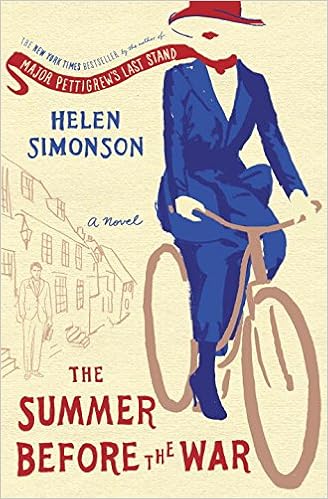
The Summer Before the War

This story had so much potential –an unexpectedly pretty Latin teacher is cast out upon the world after her father’s death and meets a young, dashing, too serious doctor. Their story begins in the lazy Edwardian “summer before the war” and despite differences in rank and privilege, they are intellectually suited for each other. I was really into it for the first 150 pages or so. Then, like a literary titanic, the next 350 pages slowly sunk under the weight of a swarm of Belgian refugees, a pouty poet, an aging nudist, and page upon page of please-poke-my-eyes-out dialogue.

I feel as though Helen Simonson experienced an identity crisis in this novel. Her first novel, Major Pettigrew’s Last Stand, was cute, verging on the ridiculous, and while I don’t fault her for wanting to write something more serious, the problem in this novel was that she couldn’t decide whose story she wanted to write. In the end, she tried to give too many characters space, which resulted in everyone falling flat. I expected something light, but ended up reading a heavy-handed, unoriginal elegy about the travails of war. Simonson needs to decide whether she wants to write Chick-Lit, thinly disguised as quality literature, or whether she wants to be the next Ernest Hemingway.


UP