January 6, 2025

War & Peace

War & Peace is the novel everyone wants to say they read, but nobody really wants to read. At 1,317 pages it is incredibly overwhelming. It hurts my wrist to hold. I reads for an hour and hardly made a dent in it. There were times I looked longingly from it to my stack of easier and more entertaining books to be read. Still, I persevered because it really is a masterpiece. Over the years, I have made several false starts on War & Peace. I think I started it three times before, only to give up after the first few chapters. This time, before I began reading I did two things:

1) I firmly resolved that come what may, I would FINISH it this time.
2) I looked up strategies for reading the novel.

Among a myriad of suggestions online, I found two that helped me immensely. First, I learned that there are five main characters and if you keep track of them, you will be able to enjoy the novel. Second, I found a family tree with these five main characters. I printed it out, laminated it, and made it into a bookmark. I used this as a reference as I read the novel and it was very helpful.

Now, you might be thinking, "that's a lot of work for a novel!" and yes, it was a bit like preparing for a class. Was it worth it? Absolutely!

At its heart, War & Peace is about characters who are trying to find the meaning to life. What will make us happy? Where is God? Is it more satisfying to live for ourselves or to live for others? How can we overcome heartbreak and disillusionment? Ultimately, what will really satisfy the cravings of our souls? The five main characters wrestle with these questions and answers are given, but getting to those answers will cost you some time, much of which will be spent on the field of battle during the French invasion of Russia.

There are hundreds of things I could write about this novel, but no one would read them and I don't have time, so I'll end this review with my favorite quote from the novel, which in many ways sums up the idea that I found most beautiful in the novel:

"We imagine that when we are thrown out of our familiar rut all is lost, but that is only when something new and good can begin. While there is life there is happiness. There is much, much before us" (1204).


November 22, 2019

Shirley

When Charlotte Brontë tells you that what you’re about to read is the equivalent of “cold lentils and vinegar without oil,” you should heed her warning. Exhausting, tedious, sometimes interesting - Shirley is one of those novels where, when you finally reach the conclusion, you happily shut the book and say to yourself, “I’m glad I read this, but thank goodness it’s over!”

Caroline and Shirley are the two alternating pole stars around which this novel revolves. Caroline has inner intensity and a sort of philosophical quietude and purity that renders her Madonna-esque. Shirley, when finally introduced, is as strong and fiery as any Brontë character you could wish for. She’s what modern female readers will gravitate towards – independent, immovable, and free to laugh at the pettiness of the pre-Victorian conventionalities that surround her because she has money and land and can do whatever she wants.

Interesting as Caroline and Shirley were, this novel needed an unforgiving editor to slash and cut the tiresome parts away. The prose often meandered into philosophical paths which most will not want to follow. The industrial angle is illuminating, but hardly gripping. Biblical allusions and Greek mythological references commingle, sending one into a fog of extended metaphors from which there is a very real fear that one will never again emerge. How different from the tightly woven prose of Jane Eyre, from which there is not a single sentence that could be cut that would improve the entire novel.

If you make it through Shirley, you will probably find that it was worth the struggle, but don't expect those "cold lentils and vinegar without oil" to go down without a fight.


December 24, 2018

The Secret History of Jane Eyre

While not agreeing with everything this author theorizes, I enjoyed The Secret History of Jane Eyre. It was a quick read and the biographical snippets of Charlotte Bronte’s life were interesting, though I do feel like Pfordresher unfairly focused on the darker aspects of her character.

There are some intriguing analogies between Charlotte Bronte’s life and her most famous novel, but Pfordresher overreaches himself at times. While Bronte certainly did draw on the people around her to build her characters, Pfordresher underemphasizes that key player in every writer’s life: imagination.

There were times where Pfordresher needed to offer more evidence. For instance, he states that Charlotte’s damning portrayal of her school, Cowan Bridge, was justified according to sources and that it was much worse than she portrayed in Jane Eyre (assuming she used Cowan Bridge as the model for Lowood), but then he doesn’t cite any of those sources.

There was a lot of discussion of Charlotte’s juvenilia. It seems obvious that her later works grew out of her early writings; the time spent analyzing the connections mostly seemed irrelevant.

I don’t believe Jane Eyre was as completely autobiographical as Pfordresher claims, but I appreciated the connections he made between her life and her novel. I was surprised that he didn’t spend more time discussing Villette and relating it to Jane Eyre, as it is certainly the most autobiographical of Bronte’s works.

Overall, this was a worthwhile read, but it wasn’t as revelatory as the captivating title lead me to believe.


July 26, 2018

The Country of the Pointed Firs

It is hard to articulate why I loved this book so much. It’s not really a novel, more a loose series of character sketches. The main characters are mostly unmarried and widowed women whose dispositions have been shaped and sculpted by the rough winds of life. They are as beautiful and solid as the rocky Maine shoreline. This is one of those books you read with your heart. You feel every nuance, everything that’s not said, and every small joy and great disappointment of each character.

The characters in this book reminded me of those found in L.M. Montgomery’s stories, but they were more somber and mature. William, especially, reminded me of Matthew Cutburt: the quiet dignity, the shyness, and the patience – it was like reading an alternate storyline for Matthew.


The only thing that threw me was the narrator. I could never quite figure out who she was, why she was there, or what her real purpose was. Yet, I think in leaving the narrator undeveloped, Jewett allows her reader to effectually become the narrator. Her experience is our experience. Her observations ours. There is no distance. In reading The Country of the Pointed Firs we live for a season on the coast of Maine. We develop relationships and sympathize with a host of folks who are in the autumn of their lives. We conclude, like our narrator, that “in the life of each of us … there is a place remote and islanded, and given to endless regret or secret happiness; we are each the uncompanioned hermit and recluse of an hour or a day; we understand our fellows of the cell to whatever age of history they may belong” (89).


May 26, 2018

Ramona

This was an interesting, overdramatic, and occasionally entertaining read. First published in 1884, when contextualized with other 19th century social reform novels, I can appreciate what Helen Hunt Jackson was trying to do: bring awareness to the sad plight of the California Indians. In many ways, I think she was successful. I learned a great deal about the injustices that occurred to the Indians at both the hands of the Mexicans, and the Americans. 

The narrative flowed well and Hunt's writing was lovely. Her characters were fraught with more emotion than sense though. The most interesting character was probably the Señora Morena. She was awful, but she was complex. As for Ramona, I started to get irritated with her half-glass-full mentality just as much as I became annoyed by Allesandro's bleak fatalism. Those two really were a match made in heaven. 

I don't even know what to say about the deeply Oedipal relationship between Señora Morena and her son, Felipe, whose lack of cojones was truly appalling. 

"Felipe bowed his head in his mother's lap. She laid her hands on his hair, and stroked it with passionate tenderness. 'My Felipe!' she said. 'It was a cruel fate to rob me of you at the last!'
'Mother! mother' he cried in anguish. 'I am yours, -- wholly, devotedly yours! Why do you torture me thus?'" 

And I'll just leave you with that ... 

I actually enjoyed this novel quite a bit, but certain characters are so obviously marked out for suffering, that it was hard not to criticize it as I read. I can honestly say the ending surprised me, which is hard to do in a didactic novel. It's definitely worth reading, just be prepared for some melodrama. 


January 22, 2018

The Cellist of Sarajevo

Isn't it disappointing when you've been looking forward to reading a book only to discover it's not that good once you finally read it? 

Despite having The Cellist of Sarajevo on my "To Be Read" list for several years, I had no idea that this story was based on a real person until I googled the book. After a mortar attack killed 22 people waiting for food in a downtown Sarajevo marketplace in 1992, the cellist, Vedran Smailović, became famous for playing Albinoni's Adagio in G Minor (a fittingly haunting and lamentable piece of music) for twenty-two days straight at the site of the attack. He did this under the threat of snipers. He would also play in ruined buildings around Sarajevo and during funerals. 

I won't go so far as to say there is nothing to be gained from reading this book. It was easy enough to follow and I did learn a bit about the Siege of Sarajevo, but getting through it was a slog because the writing had the unmistakable tang of a creative writer desperate to compose something meaningful & over-conscious of his craft. The phrase, “the men on the hills” seemed to appear on every page and there was too much pontificating on death and war. The unceasing silent soliloquies of the three main characters were meant to be thought provoking, but they were so artlessly done that they fell as flat as their own undeveloped characters. Overall, this is a short book that never seems to end. The real story of the Cellist of Sarajevo, Vedran Smailović, is incredibly inspiring. The fictional account is not.

The death knell of this book really rang though when I read that Smailović, who survived the siege and is now living in Ireland, felt incredibly angry when he found out about it. He said, "How is it possible? They steal my name and identity. Nobody can take the rights to that from me. It's quite clear that it is me in the book ... I expect damages for what they have done, an apology and compensation." I was surprised that Galloway undertook to write about Smailović without asking permission. I find it very disrespectful. He has capitalized on Smailović's story; a story Smailović should have been allowed to tell in his own time and way, if that is what he wanted to do. 

This article gives a good rundown of the controversy. It was written ten years ago though and I can't find any information about how things were finally resolved. I'm guessing they never were. 


September 26, 2017

Jane of Lantern Hill

Every time I read a new L.M. Montgomery book I’m amazed at her seemingly infinite powers of characterization. Montgomery’s female characters may all spring from the same well of youthful optimism, but they are always unique individuals.

Jane of Lantern Hill begins on a cold day in Toronto. Jane lives with her hard-as-steel grandmother, crusty Aunt, and her mother, who is quite pretty and about as substantial as a butterfly wing. Smothered by her surroundings, Jane is always hoping that someone will let her do something useful. She is the type of girl who would rather have an old doll to take care of than a brand new one to display. Jane’s life is turned upside down when she finds out that the father she thought was dead is actually alive and living on Prince Edward Island. Her world changes forever when he writes that he wants her to come stay with him for the summer.

Why do I love Jane so much? Probably because I’m more of a Jane than an Anne Shirley, whom I love, but whose bright popularity and inability to stop talking are a bit foreign to my own personality. Jane is my kindred spirit. She’s quiet, but undaunted by those who would poison her with their cynicism. Jane sees the joy in taking care of a home, in houses with lights glowing from the windows, in geraniums in her windowsill, and special quilts tucked up on all the beds. She loves her garden and vows to bake the perfect pie. Of course, in an old maid such as myself, these attributes seem, well, old maidenly, but in a young girl there is a sweetness and wonder in all her accomplishments on Lantern Hill.

“There was a tangle of sunbeams on the bare white floor. They could see the maple wood through the east window, the gulf and the pond and the dunes through the north, the harbor through the west. Winds of the salt seas were blowing in. Swallows were swooping through the evening air. Everything she looked at belonged to dad and her. She was mistress of this house . . . her right there was none to dispute.”

It’s pure L.M. Montgomery magic. Lest you think Jane is just a homebody, she does have her fair share of adventures. I won’t ruin those for you though because I’m certain you need to read this for yourself!


Find the book here: Amazon

July 27, 2017

Your Three-Year-Old: Friend or Enemy

Alternatively helpful and useless, Your Three-Year-Old: Friend or Enemy, comforted me even while it made me scratch my head in bewilderment.

The first chapter, “Characteristics of the Age,” contained the best information. In it, the authors explained about the stages of equilibrium and disequilibrium that a child goes through. I found this comforting, as my 3 ½ - year -old is definitely in a stage of disequilibrium. “Your child is not your enemy. It is not you against him” (12), the authors, in emphasizing italics, remind their readers. So the next time your child throws cereal all over your freshly vacuumed floor, and then steps in it to grind it a little further into the carpet (and your soul), repeat this to yourself: “you are not my enemy.” It might help.

There were several things that were downright unhelpful or just so common sense you cringe to think that some parents are actually asking such questions (no, mom, your child is not a “mental crackup” because she wants to use her left hand for things). The chapter on the three-year-old birthday party didn’t seem to offer much. Let me tell you, there’s only one schedule for a child’s birthday party: chaos, pure uninhibited sugar high chaos from start to finish.

Their advice for hard to handle children often consisted of getting a babysitter or sending your child to day care so you don’t have to deal with them. “Day care when necessary can reduce the time you will need to spend together” (12). True, but not very helpful for the modern stay-at-home mom on a budget. If that doesn’t work for you, there’s always the other type of babysitter: “the television can be your friend. Wisely used, it can keep a child happy, well behaved and out of difficulty for long periods” (30). Here’s your golden ticket to guilt-free screen time for your children!

The letters from disgruntled parents at the end and the authors masterful, yet slightly insulting, advice was a real goldmine. One mother gave her child a toy clown and then let him watch a violent show on TV with clowns in it. Much to her surprise, he suddenly became afraid of his clown. She asked if maybe she should “burn the clown before his eyes” or whether they should take the toy clown on vacation or leave it behind. The authors opened up their response with the understatement of the year, “You seem to have made several mistakes.”


Find the book here: Amazon

June 19, 2017

The Hired Girl

I LOVED this book. My mom recommended and loaned it to me and I’m so glad she did. Reading The Hired Girl was like experiencing Anne of Green Gables for the first time. It was that good.

After her mother’s passing, Joan Skraggs seems destined for a life of drudgery on her family’s Pennsylvania farm. Forbidden by her embittered father from continuing her education, Joan must work tirelessly to take care of her three older brothers and emotionally abusive father. Cooking, laundry, ironing, scrubbing the floor, taking care of the chickens, cleaning out the privy … she does it all. Seeking a better life for herself and with the dream of someday obtaining an education and becoming a teacher, at 14 Joan runs away from home to become a hired girl. She finds employment in a Jewish household (Joan is Catholic), and what follows is a charming coming of age story set in early twentieth century Baltimore.

Written in journal format, the tone of this novel reminded me a lot of Daddy-Long-Legs. Joan’s voice is original and personable.

“I wish I was a hired girl. Of course, I’d rather be a schoolteacher. But I bet those hired girls – foreigners, most of them – don’t work a lick harder than I do, and they get paid six dollars a week. And here I am, without a penny to call my own” (39).

Bookish girls and women who were once bookish girls will relate to Joan’s love for literature, her active imagination, and the way she romanticizes her own life and the lives of others. Not surprisingly, this leads to some awkward situations and personal disasters as she discovers that life doesn’t always mirror art in the way one would expect. I loved Joan Skraggs. She was feisty, optimistic, loveable, witty, clumsy, intelligent, and in turns mature for her age and then very much a naive fourteen year-old. She was real.

What impressed me the most about this book though was how it dealt with the topic of religion. I learned a lot about Jewish customs, but it also touched on religious persecution and how people who hold different, but very strong religious beliefs, can come to understand and love one another.


Find the book here: Amazon

June 16, 2017

The Underground Railroad

I can’t say I enjoyed this novel. Much like Holocaust fiction, you really can’t enjoy slave narratives (especially ones bent on exposing every cruelty imagined). But I didn’t dislike this novel either. Ripe with metaphor and reimagined horrors perpetuated against African Americans, it kept me interested with its strange mixture of fact and fiction.

Whitehead’s novel reconfirmed my childhood misconception that the underground railroad contained a real train that ran underground. The reader is conveyed through a network of dark tunnels and iron tracks, carried on rickety engines with strange conductors. We accompany Cora, the protagonist and runaway slave, whose fierce desire to run to freedom is awakened when the cruelties, both present and anticipated, of the Georgia plantation she is on become heavier than the fear of capture and torture. Early in her journey on the railroad, Cora is told that if she “look[s] outside while [she] speed[s] through, [she’ll] find the true face of America.” It doesn’t take a skilled English major to interpret this metaphor, which is repeated throughout the story. The only light Cora ever sees in the tunnel is when she comes to the end of it. What lies beneath, what’s in the heart of America, is only darkness.

This novel was bleak. Whitehead reminds the reader that even though slaves can escape, memory will never allow them to truly break the bonds of their past. The white people are generally depicted with an overinflated love for cruelty and barbarianism. Even the white people who help convey Cora to different stops on the railroad or hide her at their own peril are not shown in an advantageous light. I found his depiction of Ethel particularly degrading. “No one was spared, regardless of the shape of their dreams or the color of their skin” (216).

In one memorable scene, Cora is hired to work as an actor in a display for a Museum of Natural History. As she participates in this pantomime of the slave experience, Cora begins to rebel against the sneering faces that scowl and mock her by staring back at the crowd, “her eyes, unwavering and fierce,” (125) until the person she has chosen to give “the evil eye” turns away from her. “They always broke, the people, not expecting this weird attack, staggering back or looking at the floor or forcing their companions to pull them away. It was a fine lesson, Cora thought, to learn that the slave, the African in your midst, is looking at you, too” (126). Black history has been stolen by white narrators and Whitehead aims to take it back.

This novel was thought provoking and certainly worth reading, but Whitehead’s emphasis on violence often seemed indulgent, as though the only way to drive his point home was to make a spectacle of horror. The fact that this novel won the 2017 Pulitzer Prize for fiction is a testament to the current racial tensions in our country. While I didn’t agree with all of Whitehead’s racial conclusions, the truth of this statement is what I will take away from my reading:

“All I truly know is that we rise and fall as one, one colored family living next door to one white family. We may not know the way through the forest, but we can pick each other up when we fall, and we will arrive together” (286).


Find the book here: Amazon

June 8, 2017

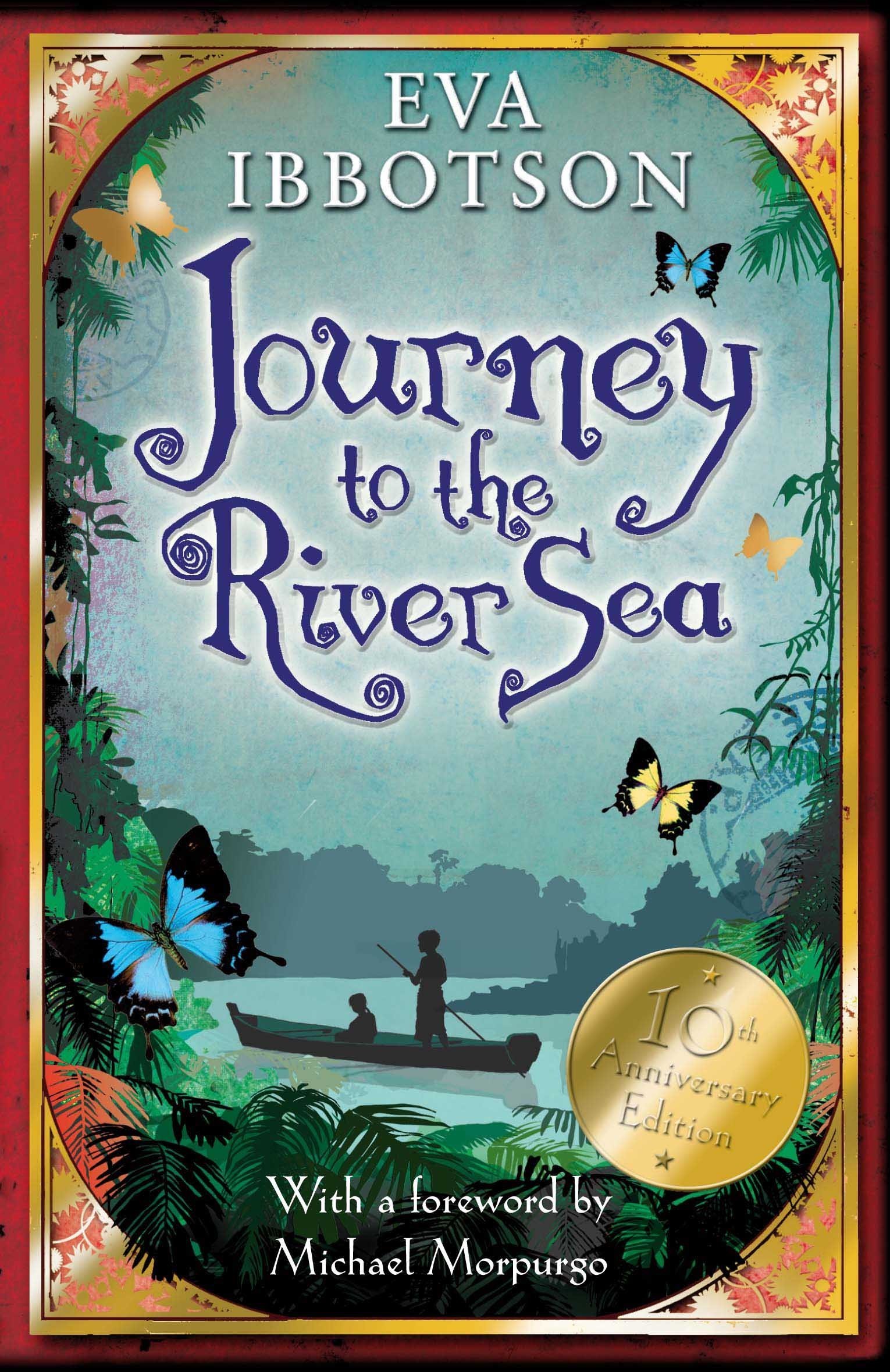
Journey to the River Sea

The Amazon is a magical place, filled with butterflies the size of birds, fragrant orchids, wondrous medicinal plants, and friendly Indians who are happy to see you, as long as you’re nice to them and show them you’re there to learn, not judge. Humidity, mosquito bites and malaria, cannibals, piranhas, poison dart frogs, boas, vipers, and anacondas are only to be feared if you’re a stodgy, pudding loving Anglophile who doesn’t properly appreciate the Amazon.

While certainly not realistic, Journey to the River Sea is enchanting. The sentiment that “children must lead big lives,” is at the heart of this story. Ibbotson makes you believe that pre-teens are capable of doing things better than most adults and that an enlightened parent would actually let their child sail down the Amazon, provided they took their mathematics textbook with them and continued to brush their teeth.


Find the book here: Amazon

June 3, 2017

The Hummingbird's Daughter

Set in pre-revolutionary Mexico, The Hummingbird’s Daughter, is an absorbing and richly imagined tale of the little known “Saint of Cabora,” Teresita Urrea. Teresita had many sobriquets, but my favorite is the brazenly dramatic: “Mexico’s Joan of Arc.”

This article in True West, “The Most Dangerous Girl in Mexico,” gives a brief but thorough summary of her life.

Teresita is a distant relative of the author, Luis Alberto Urrea, which probably explains why he invested 20 years of his life learning about hers. A lot of times such a well-researched book feels like a summary of the author’s notes, as if they tried to pack every little thing they learned about their topic into their novel. Happily, that's not the case here. Written in the style of magical realism, Urrea’s novel deftly carries the reader through a world where the possible and the impossible are so intertwined that you can’t help but believe, if only for the duration of the narrative, that it all makes sense. In the process, you learn about vaqueros, shamanic healers, desert landscapes, and Yaqui and Mayo cultural history. There is a lot of heart, history, and humor in this novel, but also violence and some sexual content. While I think this novel is beautiful, heartbreaking, and overall very enjoyable, you might want to steer clear of it if that’s not something you want included in your reading.


May 23, 2017

The English Patient

The English Patient is probably best known because of the 1996 movie. I haven’t watched the movie (do love the soundtrack), but I think it would be a difficult book to adapt to the screen. The English patient, a man burned beyond recognition after his plane goes down in the North African desert during WWII, is actually one of four central characters in this story. There is Hana, a young Canadian nurse suffering from PTSD. Caravaggio, also a Canadian and a professional thief, who worked for the British intelligence during the war and who knew Hana when she was a child. Finally, there’s Kip, a sapper from India who has a talent for dismantling even the most intricate of bombs and who embodies the conflict between East and West. In the present, they all reside in a bombed out Italian villa. The narrative voices of these four characters converge and flow apart; illumination comes most often through flashbacks. At the heart of the story is the question: who is the English patient?

Ondaatje’s prose, like poetry, is best read slowly and with the intention of visualizing and savoring it. Don’t try to stomp and speed your way through this book and don’t expect an abundance of clarity. The good news: if you lose the narrative thread (which, I promise, you will do from time to time), the language is so enthralling that you will most likely overcome your feelings of  frustration that things are getting hazy. I suppose anyone who can write, “In the street of imported parrots in Cairo one is hectored by almost articulate birds,” can get away with leaving the reader in a desert of confusion, riding the wave of an almost articulate narrative.


Find the book here: Amazon

April 7, 2017

Amy Snow: A Novel

This was an amusing read. Just a few hours old, infant Amy Snow is abandoned and left for dead in a snowbank on the great Vennaway’s estate. Their kind daughter and heiress, Aurelia, finds Amy and forces her parents to keep her in their household. Amy grows up hated by Aurelia’s parents, but loved by Aurelia. Tragically, Aurelia dies young, but she leaves Amy coded letters that lead her on a hunt across England to discover Aurelia’s great secret. As she goes on this quest, Amy learns much about herself and her deceased friend.

While the resulting love story got a bit sappy for my taste, and the “mystery” wasn’t hard to figure out, Amy Snow is interesting enough as a character that the transparency of the mystery can be overlooked. Meek and abused at the beginning, she gains strength and self-respect as she overcomes obstacles and discovers that the world isn't as black and white as she imagined. Some aspects of the story needed to be better developed though. I wasn’t completely satisfied with the resolution and the explanation for Amy’s poor treatment as she grew up in the Vennaway household.

Still, if you’re looking for that comfortable combination of light reading + historical fiction, you will probably be able to overlook where this story falls short. I’m guessing fans of Julianne Donaldson, author of Edenbrooke and Blackmoore, will find this novel very appealing.


The Year of Lear: Shakespeare in 1606

Unless you consider yourself a Shakespeare scholar (or aspire to be one), you will probably find this book dense and tedious. That’s not to say it doesn’t contain a plethora of worthwhile information. I learned much about King James’ obsession to unify England and Scotland, Jacobean attitudes towards witchcraft and sorcery, and the Gunpowder Plot. Of the three plays Shapiro focuses on, King Lear, Macbeth, and Antony and Cleopatra, I most enjoyed Shapiro’s analysis of King Lear and I found the chapter, “Leir to Lear” intriguing - I had no idea King Lear was based on an older play, King Leir. However, by the time Shapiro got to the “Equivocation” chapter, my attention began to wander.

Ultimately, I learned more about the historical context of the year 1606 than I did about Shakespeare. Suppositions in this book abound; things Shakespeare might have read, done, or seen are included without any evidence. Educated guesses are intriguing, but not reliable scholarship. There’s a reason a number of Shakespeare scholars came together for the publication of a rebuttal book, Contested Years: Errors, Omissions, and Unsupported Statements in James Shapiro’s ‘The Year of Lear: Shakespeare in 1606.’ According to the Amazon synopsis, it is “an essential companion to one of the most flawed and misleading works by an accredited academic professor of the last decade.” Yikes. I think this is one of those books that is better fit to be picked apart in a classroom than it is for personal reading, but more power to you if you decide to wrestle with it on your own.


March 21, 2017

Victoria: The Queen

I didn’t think I could enjoy a biography about Queen Victoria as much as I did Christopher Hibbert’s, Queen Victoria: A Personal History, but Julia Baird’s “intimate biography” of Victoria proved me wrong.

Baird’s writing style is engaging, yet I never felt that she was compromising historical facts in order to dwell in maudlin speculation (though she came dangerously close when writing about Victoria’s relationship with her Highland servant, John Brown). I have no time or patience for writers such as Daisy Goodwin, whose recent novel, Victoria, and the accompanying PBS miniseries about Victoria’s life, are really nothing more than a gaudy charade of history that panders to the unsuspecting and uncaring. I have nothing against entertainment, but why distort the facts of a life and the character of a person that was already colorful enough? Victoria is not a minor historical figure and there is so much known about her and her life that it seems irresponsible and ridiculous to misrepresent her for the sake of trying to please a modern audience.

Baird points out the contradictions that shaped Victoria’s life. Unlike the steadfast and principled Albert, Victoria was a woman of spirit and feeling - which means she was often inconsistent and hot-tempered. She didn’t support women’s suffrage, yet she clamored for political control throughout the course of her reign. She was happily married, but came to decry the institution. She worried over her children and loved them, but that didn’t keep her from saying cruel things about them, having favorites, or disguising feelings of disgust or disrespect for a number of them. She was personally kind and compassionate, advocating for animal rights and worrying about individual’s feelings, and she was remarkably open minded about equality and race for her time period, yet she stubbornly refused to acknowledge or intervene in some of the greatest human rights atrocities of her age.

One area that I think Baird should have further examined was the parallel between Victoria’s actions and temperament in later years and that of her mother’s. Victoria had chaffed under and rebelled against her mother’s control when she ascended the throne, yet she was a domineering presence in her own children’s lives, even going so far as to try and keep her youngest daughter from marrying. Just as power hungry John Conroy had controlled and manipulated her mother, so Victoria was seen as being over reliant and brainwashed by her close servants, especially John Brown and Abdul Karim. Victoria detested Conroy just as her own children deplored her two closest advisors.

Finally, I thought Baird’s claim that if Albert had lived longer the age might well have been known as the “Albertine Age” was an intriguing one. Morally unmoving and staunch in his views, meticulous, scholarly, driven, and a tiring advocate for social reform, I think Baird makes a strong case that Albert is the one who embodied our conception of Victorian prudery and progress, much more so than Victoria.

Baird’s biography is refreshing (and hopefully will be more widely read than Goodwin’s novel) in that she manages to be entertaining without drama-mongering.


January 4, 2017

Discoverers of the Universe: William and Caroline Herschel

It is 3 a.m. on a damp and freezing night in the tiny English village of Slough. Just three miles north, in Windsor Castle, King George III lays sleeping. The night is moonless and billions of stars brilliantly pulsate from the heavens. All is silence and slumber, and then, a strange phantasm - twenty feet above his garden, a man sits on a platform, his eyes trained on the upper end of a monstrous telescope of his own making. An assistant stands below him, ready to move it at his command. A weak light from a nearby window breaks the unadulterated darkness and there a small woman sits at a desk. Books spread before her, clocks and mechanical instruments nearby; she sits posed with a pen in hand and paper in front of her. It is so cold the ink is nearly frozen in her inkwell, but on signal from the pull of a cord she opens the window. A man’s voice breaks the stillness and she carefully copies down his shouted observations. Then, consulting the charts and books in front of her, she shouts back information about where to look next in the sky before she closes the window. All is silence again, except for the scratching of her quill on paper.

It sounds like the makings of a science fiction novel, doesn’t it? But it is the story of William and Caroline Herschel: the 18th century brother/sister stargazing duo. William is probably best known for his discovery of Uranus and as the foremost telescope maker of the 18th century, but between the two of them they discovered new moons on Jupiter, countless nebulae, double stars, and comets. The author, Michael Hoskin, consistently points out that they were also instrumental in revising the view of the cosmos from a mechanical and clockwork universe, to a universe that changes, grows, contracts, and evolves. I guess you could say they were the Darwin of the skies.

William and Caroline were like a pair of binary stars. William was the brilliant inventor, observer and dreamer, but he was bound to Caroline who, though not the genius of the pair, was no less important as his assistant and as an astronomical observer in her own right. The success of one really depended on the help of the other.

While William was the driving force behind their discoveries and inventions, I find Caroline to be a more fascinating figure. From a 21st century feminist perspective it is a little hard to read Caroline’s half of the story and not feel like she was taken advantage of – first by a mother who wanted to keep her as an uneducated drudge, and then by her brother, who rescued her from a life of drudgery but then consistently put his own interests above hers. Hoskin sagely points out that it is both because of William’s selfishness and Caroline’s extreme unselfish commitment to him, that William was able to accomplish so much in his life. One can’t feel too sorry for her though. She was unyieldingly devoted to her brother and regularly made choices that kept her at his side. She was proud of her work, but more proud of his.

This book was succinct. Hoskin spends little time dwelling on the personal details of the Herschel’s lives, which I actually would have liked to see more of. For instance, when William finally marries there is little mention as to why he chose the woman he did or what he really saw in her. Perhaps no record of his emotions exist or quite possibly he saved his emotional and romantic energy for science rather than relationships.

Overall, this was a quick and fascinating read. I highly recommend it for anyone who wants to learn more about the Herschel’s and the wonders of early astronomy.


December 29, 2016

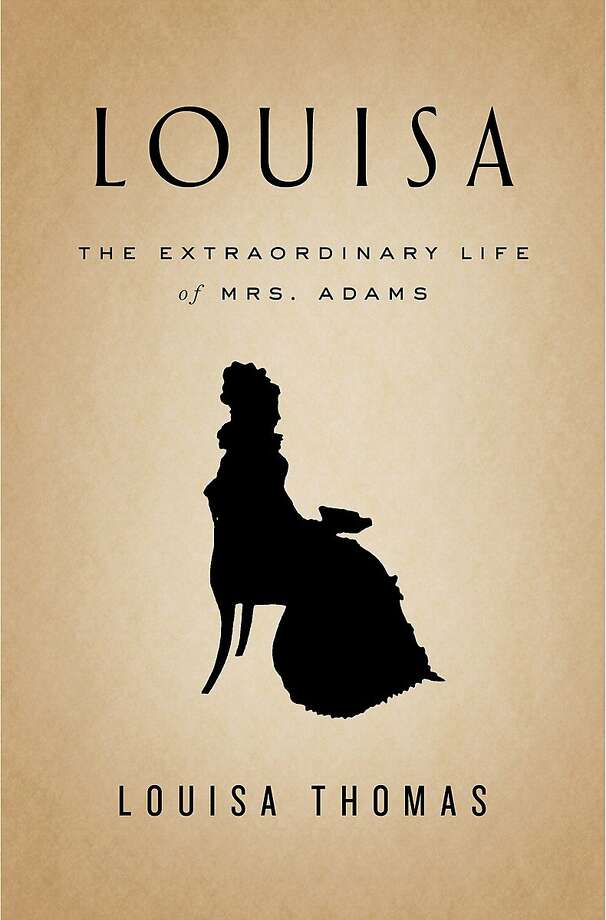
Louisa: The Extraordinary Life of Mrs. Adams

If you ever watched the HBO mini-series, John Adams, you probably developed a healthy appreciation for his wife, Abigail. Laura Linney’s portrayal of Abigail Adams was phenomenal: she was gritty, intelligent, hard working, independent, and most impressive of all, John Adams’ intellectual equal. She was the “ever guiding planet around which all evolved” (265). Abigail was the kind of woman you can’t help but admire and that you hope to emulate.

I suppose I expected the same character traits in John Quincy Adams’ wife, Louisa Adams, née Johnson. However, Louisa was not a stalwart farmwoman, nor was she interested in the staid and serious intellectual grind that was so valued by the Adams clan. Because of this, it took me a while to really come to see her strengths and appreciate her good qualities (ironically, it took a while for her mother-in-law as well).

Louisa was born in London and educated like your typical Jane Austen heroine. Her upbringing focused on entertaining, music, social skills, and speaking French. In short, she was raised for the marriage market. John Quincy and Louisa’s attraction to one another was complicated from the beginning. Both of them had strong reservations about each other. John Quincy was unsure she was serious and practical enough to be an American politician’s wife, and Louisa was unsure if he truly loved her. They both had strong tempers. As is often the case when a strong-minded man and an impetuous woman are thrown together, Louisa comes off looking the worst. In the beginning, she seems petty, immature, and lacking intellectual curiosity. She likes to dress up and be admired, she wants to wear rouge; she complains a lot and she’s unable to do anything even as practical as balancing their home account books.

However, as the years passed, a number of severe trials caused her to develop into a complex and sympathetic woman. She experienced numerous and often very painful miscarriages. She longed to be settled with her family, but she was forced to lead a nomadic lifestyle as a diplomat’s wife. And while she wasn’t interested in John Quincy’s Tacitus and Cicero, she set out on her own rather unpredictable, but no less valuable, course of study and reading. She was infinitely more interesting at 40 than she was at 20.

The most compelling chapter in Louisa’s life was when she and her youngest son, Charles, accompanied John Quincy on a diplomatic mission to St. Petersburg. Pressure from Abigail Adams forced her to leave her two older sons behind in America, something she always regretted. For six years she had to live in frozen, desolate Russia, while navigating the gaudy and extravagant aristocratic society of St. Petersburg royalty and politics. She experienced bitter loneliness and indescribable pain at the loss of a baby daughter while there. And when John Quincy was called away to Paris she was forced to live alone for nearly a year and then to make the dangerous journey from St. Petersburg to Paris on her own.

One of the most intriguing things about Louisa is that she was one of those women who is incredibly strong when they have to be, but who immediately crumples under male protection.

The author notes, “In times of adversity, forced to rise to the occasion, she often thrived. She had crossed thousands of miles from St. Petersburg to Paris, fording half-frozen rivers and meeting with unruly soldiers. She had made difficult decisions quickly and well. She had taken care of her small and terrified son. She had traveled through the night, slept very little, dealt with deserting servants, crossed battlefields, and ravaged villages, and faced the approach of a dictator. She had shown courage and self-command. She had not been overcome by fatigue. She had in fact completed the journey from St. Petersburg with such strength that her husband concluded the arduous trip had been crucial to her health. This same woman, once relieved from all responsibility and returned to the protection of her husband, after a much shorter and easier journey, was now helplessly tired and overwhelmed” (233 – 34).

John Quincy wasn’t the type of husband who was sympathetic to female weaknesses either. Much like his father, he was argumentative, bullish, and had an “I don’t give a damn what you think of me” attitude. He would shut himself up in his study, grumble and growl at visitors, and was often noted for being taciturn during important social occasions. I think Thomas makes a convincing case that without Louisa’s ability to navigate the social side of politics, there is a good chance John Quincy would have completely ostracized himself from politics through his reclusive tendencies. Louisa was charming and sociable and very aware that being able to make friends with people in high places could get you further than a well-constructed argument or strong political conventions.

A misanthrope and a social butterfly, they were an unlikely match and their relationship was often explosive and studded with anger and misunderstandings. Yet, however ill-suited their personalities were, their love became strong and true through a lifetime of shared struggles and tragedies.

A study of Louisa Adams’ life may not prompt the same respect and adoration as a study of Abigail’s would. However, her failings make her very human and approachable. Louisa truly led an “extraordinary life” because she became an extraordinary person. You will come away from this biography with not only an appreciation for her endurance and courage, but for her weaknesses as well.



December 23, 2016

A Man Called Ove

A Man Called Ove is the humorous and heartrending story of the curmudgeon next door. Ove is the kind of man who, on first making his acquaintance, you would probably shake your head, wonder what could make a man so spiteful, and then do your best to try and avoid him in the future. Ove’s approach to life is black and white. He is an obsessive rule follower and a crank. He works with his hands, follows an outdated code of masculinity, and he doesn’t understand why the world is changing around him.

Ove’s life gets turned upside down when a new family moves next door. A series of hilarious accidents follows in their wake and even while Ove shakes his head in bewilderment and his fist in rage, he can’t help but be drawn in by them.

I think everyone has or has had someone in their life who is a lot like Ove – the grandfather who rails against the price of pretty much everything, the taciturn old Uncle who sits unsociably at holiday dinners, the curmudgeonly neighbor who refuses to wave or smile when you pass by. The magic of this story is that it reveals the deep humanity that can be found underneath a harsh exterior. It is a reminder that even the most cantankerous and hard to understand people will flourish when they are loved and needed.


November 1, 2016

Behind Closed Doors: At Home in Georgian England

Behind Closed Doors is a study of Georgian interiors, the importance and purpose of home, emerging commercialism and desire for home goods, the domestic spheres in which men and women moved, and the social hierarchy and expectations in the home. It is also an analysis of Georgian home decorating, which includes such things as the popularization of wallpaper, the development of “taste,” and the simultaneous celebration and marginalization of women’s handicrafts.


What I found most enjoyable in Vickery’s book wasn’t the academic analysis of wallpaper or the analysis of male/female roles, but the case studies of the lives of individuals, as revealed through their letters and journals.

My favorite was the depressive spinster, Gertrude Savile, whose luckless love life was further compounded by having no money of her own. With no income, she was completely reliant on her brother, a rich baronet, and she keenly felt the humiliation of having to beg him for “every gown, sute of ribbins, pair of gloves, every pin and needle” (188). Her cheerless journal entries give vivid insight into her personal melodrama. Speaking of her brother’s house she says, “I was mightily estrang’d to it. It used to have a more friendly home air, but now I thought myself a stranger . . . I fancy’s the very walls look’d inhospitably upon me and that everything frown’d upon me for being an Intruder” (189). Bitter and feeling unwelcome, Gertrude would confine herself to her room, where handcrafts and her cat were her only pleasure. Luckily, for Gertrude, she was eventually liberated from this arrangement by a legacy, which allowed her to move into her own lodgings and experience the independence she always longed for.

There are dozens more stories of personal intrigue and tragedy, including that of the dissipated bachelor, George Hilton, whose diaries reveal an addiction to drinking, gambling, and whores. Filled with remorse, Hilton would resolve “to have soe punctuall a guard over my inclynacions as never to lose my reason my imooderate drinking” (71) and that “never will I knowe a woman carnaly except in a lawfull state.” (71). Of course, he broke these resolutions quite speedily, which he candidly recorded in his journal.

These stories are what made Vickery’s book come alive for me.

While Vickery writes with a liveliness and wit that may surprise you, considering much of her source documents were account books and ledgers, there was some unavoidable monotony, often coming in the form of the repetition of lists found in her research These are quick to skim over though and the majority of this book was filled with fascinating facts and pithy observations.

One of the benefits of reading this book is that there is an accompanying 3-disc series, At Home with the Georgians, which is narrated by Vickery and wonderfully entertaining. If the book sounds like a bit of an academic stretch for your reading tastes, just watching this series will give you the highlights of the book without any of the cumbersome academic discourse. ;)


UP